
Brunswick, GA · Garage Door Service
Why Garage Door Springs Fail in Brunswick's Cold Spells
Brunswick homes built mostly 1979-1987 still run on original torsion springs, and the area's mild-with-occasional-freeze climate is exactly what finishes off 40-year-old steel.
- Repairs & new doors
- Springs & openers
- Serving 4 nearby communities
When to Call Someone
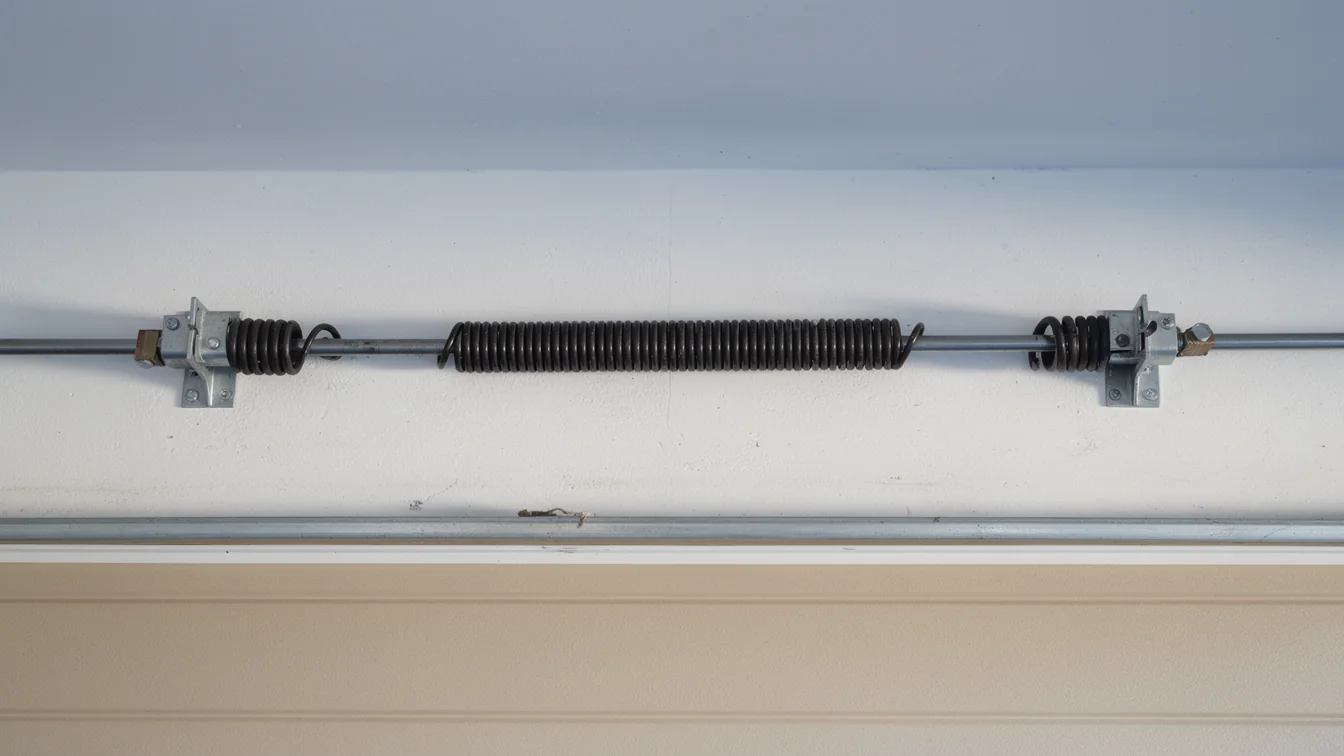
If your door bangs loud, drops fast, or won't budge at all, that's a torsion spring, and you call someone rather than touch it. A wound spring under tension can break a hand or worse, and most houses in this area went up between 1979 and 1987 - which means the spring on that door is pushing 40 years old if it's never been swapped. That's past the point where a spring is a maintenance item. It's a spring waiting for the next cold morning to let go. Listen for a single loud bang from the garage, usually first thing in the morning - that's the sound of a spring snapping, not a slipped track. If the door is heavy to lift by hand, won't stay open on its own, or the cable has gone slack on one side, stop using it and call. Don't try to wind or unwind a torsion spring yourself. It's one of the few jobs in this trade where a mistake puts someone in the hospital, and that's true whether the house is in Country Club Estates or out toward Dock Junction. If the opener is straining, grinding, or reversing on its own, that's often the spring too - the opener is fighting a job the spring used to do.
What Local Conditions Do
Brunswick sits in a mild climate band with occasional freezes, not the hard winters that keep springs young through constant flexing and lubrication cycles. What that means here is different from what it means somewhere with real winter: steel springs on 1980s-stock houses sit at the same tension for months at a time, then get one or two cold mornings a year that tighten the coil and make a tired spring finally give. A spring that's been slowly fatiguing for four decades doesn't need a hard freeze to break - it needs one cold snap to be the excuse. We see the pattern every year: calls spike right after the first real cold stretch, not during a heat wave, not in the middle of a mild October. That's not coincidence, it's physics - cold steel is less forgiving steel, and a spring that's already near the end of its life cycle picks the cold morning to fail rather than the warm one. If your door is original to a house built in that 1979-1987 window, the spring has already outlasted what it was rated for, freeze or no freeze. The freeze just picks the day.
The Situation
Across the service area - roughly 8,303 households, with about 2,596 of those being owner-occupied houses rather than rentals - the housing stock runs heavily 1980s and 90s, same five areas you'd recognize: in toward town and out to Country Club Estates, Dock Junction, Darien, Woodbine, and Waynesville. A lot of these doors and springs are original equipment, never touched since the house was framed. Median household income here runs around $56,746, which matters because it shapes the call we get most: not 'replace everything,' but 'fix what's broken and make it last.' That's a reasonable ask, and it's usually the right one - a spring swap on an otherwise sound door is a straightforward job, not a reason to replace the whole unit. Where it gets complicated is houses that have had zero maintenance since 1981 or so - the spring is only part of what's worn. Rollers, cables, and hinges from the same era are often on borrowed time too, and fixing just the spring on a door that's rusted elsewhere is a short-term answer.
Leaving It Alone
Here's the honest part: a broken spring doesn't always mean a dead door, and we won't tell you it does. If the door still tracks straight and the opener isn't straining, a spring swap is often a same-visit fix, not a sales pitch for a new door. But we also won't pretend a 40-year-old spring breaking is a one-off. If one side went, the other side is usually close behind - they age on roughly the same clock, and replacing just one almost always means a second call within a year or two. That's not us padding the job; it's what happens with matched springs under matched tension. What we won't do is wind a spring with mismatched tension against an old one and call it done - that's how you get a door that slams on one side. And we won't guess at spring size over the phone; we size it off the door and the drum, every time, because a wrong spring is worse than a broken one. If your door is original to the house and you're not sure how old the spring is, that uncertainty itself is worth a call before, not after, it breaks on a cold morning.
Frequently asked questions
Why did my spring break on a cold morning and not during the summer?
Cold steel loses some give, and a spring that's already fatigued from decades of use is more likely to finally snap when the metal is tight from a cold snap than on a warm day when it has more flex. Brunswick's climate runs mild with occasional freezes, so these cold-morning failures cluster right after the first real cold stretch each year.
Is my spring original to the house?
If your house was built in the common 1979-1987 range for this area and you've never had a spring replaced, odds are good it's still the original. A spring that old is past its working life regardless of how it looks - it's worth having it checked before it breaks rather than after.
Do I need to replace both springs if one breaks?
Usually, yes. On a two-spring door, both springs are wound to work together and they age on close to the same schedule. Replacing only the broken one often means the second one fails within a year or two, so most of the time it makes more sense to do both at once.
Can I just tighten or adjust the spring myself?
No. A torsion spring is under heavy tension and winding or unwinding it without the right bars and know-how can cause serious injury. This is one job in garage doors that's genuinely not a DIY repair, no matter how simple it looks.
Related garage door services in Brunswick
More garage door guides
Book garage door service in Brunswick
Call now or request a quote - tell us what the door is doing and where you are.